
What is Swipeable?
Keez, of the art collective PIPS:lab, is the unintended inventor of the swipe. In the nineties, he and a partner who later went to work at Apple built the first swipeable website: a seemingly simple invention that, through an enormous butterfly effect, has changed how we live, watch and divide our attention.
In the virtual-reality documentary Swipeable, Keez and the XR Lab imagine the next step: the swipe in VR. Instead of moving a thumb through a feed, you swipe entire three-dimensional worlds out of the way.
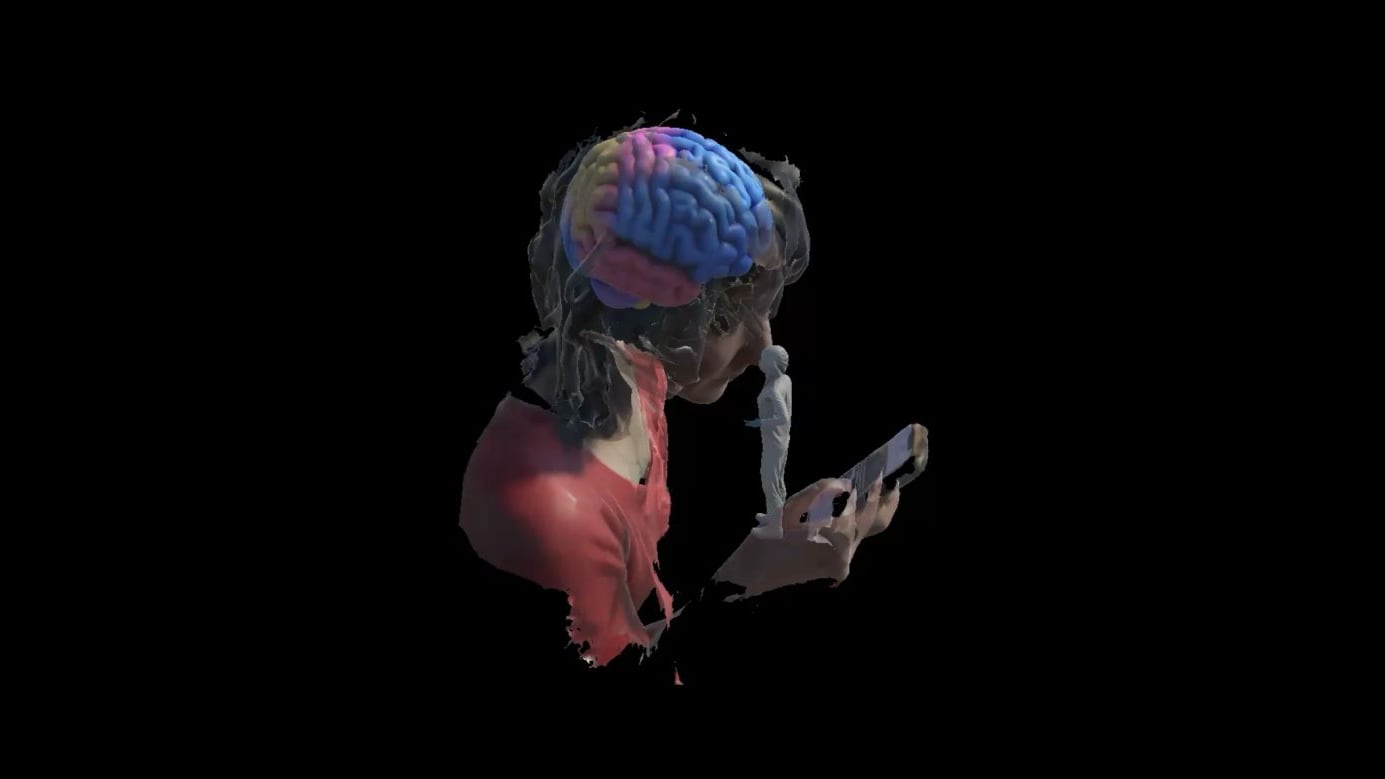
Together with Keez, interns of the XR Lab, with production coordination by Collin van Ginkel, built an interactive application that turns the subjects of today’s feeds into overwhelming 3D worlds: from gambling and propaganda to the manosphere and the other systems that compete for our attention. Running between these worlds is a story about what doomscrolling does to our brains. Why do we keep swiping? What keeps us hooked? And can we design technology that leaves more room for rest and balance?
How it works
Every post in the feed is a “node”: a full 360° world, from a casino advert to a propaganda broadcast or a carriage full of commuters each lost in their own headset. A sweep of the hand swipes the world away and brings in the next. A hologram on your wrist lets you like or dislike each node, and the feed adapts, steering you further into the genres you respond to. At the end, you see how you moved through this simulated internet: your attention span, your favourite genre, and where you land on a “genre compass”.
The experience runs on a Meta Quest 3 with hand tracking. The characters were animated with motion capture recorded on the headset itself, and some nodes are filmed 360° video.
My role
I was the senior game developer on the project: I led the development team of interns, reviewed their code, and stepped in on the harder technical problems.